How Window Tinting Protects Your Car's Interior from UV Damage in Huntersville NC
Most car owners in Huntersville think about UV protection for their skin but rarely stop to think about what the sun is doing to everything inside their vehicle. Every single day, ultraviolet rays pass silently through unprotected glass and begin breaking down your dashboard, seats, door panels, and trim without any visible warning signs. By the time the cracking and fading becomes obvious, the damage is already done and reversing it is costly. Champion Window Tinting has worked with hundreds of local drivers who discovered this the hard way after years of parking in open lots along Sam Furr Road with zero UV protection on their windows. This article explains exactly how window tinting in Huntersville NC works as a genuine barrier against UV damage, why standard automotive glass is not enough on its own, and what type of window tinting film gives your car's interior the strongest long-term protection available.
Why UV Damage Is a Real Problem for Huntersville Drivers
Huntersville sits in Mecklenburg County, just 14 miles north of Uptown Charlotte. The town experiences a warm, humid subtropical climate that brings long sunny summers and mild winters. Those sunny afternoons are perfect for a visit to Lake Norman State Park or a weekend outing at Ramsey Creek Beach. That same sunshine, however, means your car absorbs intense solar radiation for a significant portion of the year.
North Carolina averages around 213 sunny days per year, sitting above the national average of 205. For drivers heading south on Sam Furr Road toward town or looping through local neighborhoods, that translates to hours of direct and reflected sunlight hitting your windshield and side windows every single week. Over months and years, that accumulated exposure adds up to serious, costly interior damage.
How Much UV Exposure Do Cars Get in North Carolina?
The sun emits two types of ultraviolet radiation that reach the Earth's surface: UVA and UVB. Standard automotive glass blocks most UVB rays, but it allows a large portion of UVA rays to pass right through. UVA rays are responsible for the slow, creeping damage you see in aging car interiors. They are invisible, they are relentless, and without UV protection window tinting in Huntersville NC, your car's interior absorbs the full impact day after day with nothing standing in the way.
What UV Rays Actually Do to Your Car's Interior
Most car owners think of UV damage as something that only affects their skin. Your car's interior is just as vulnerable, and the deterioration happens gradually enough that many people do not notice it until the damage is already significant and expensive to address.
Dashboard and Trim Deterioration
Your dashboard is made from a combination of plastics, vinyl, and composite materials. All of these are highly sensitive to prolonged UV exposure. Over time, UVA rays cause the molecular bonds within these materials to break down, which leads to cracking, warping, and a chalky, faded appearance. Anyone who has owned a vehicle for several years in a sunny state like North Carolina has probably noticed how the top of the dashboard develops a dull, dry texture. That is UV damage working in plain sight.
The problem goes beyond aesthetics too. A cracked dashboard is harder to clean, more prone to further splitting, and significantly reduces the perceived value of the vehicle when it comes time to sell.
Seat and Upholstery Fading
Leather, faux leather, and fabric seats all degrade under UV exposure in the same fundamental way. Leather dries out and cracks. Fabric fades and weakens. The color difference between a seat cushion that receives regular sun exposure versus one that stays shaded tells the whole story. Drivers who park outdoors near Huntersville Athletic Park during long weekend events will often return to a noticeably warmer, UV-stressed interior compared to those parked in covered areas.
Steering Wheel and Plastic Component Damage
Your steering wheel is arguably the most-touched surface in your vehicle, yet it is also highly exposed to UV rays pouring through the windshield. UV degradation causes the material to dry, harden, and eventually crack. The same applies to door panels, center console trim, and other plastic components throughout the cabin. Once this deterioration begins, reversing it without expensive professional detailing or outright replacement becomes nearly impossible.
How Window Tinting Blocks UV Rays
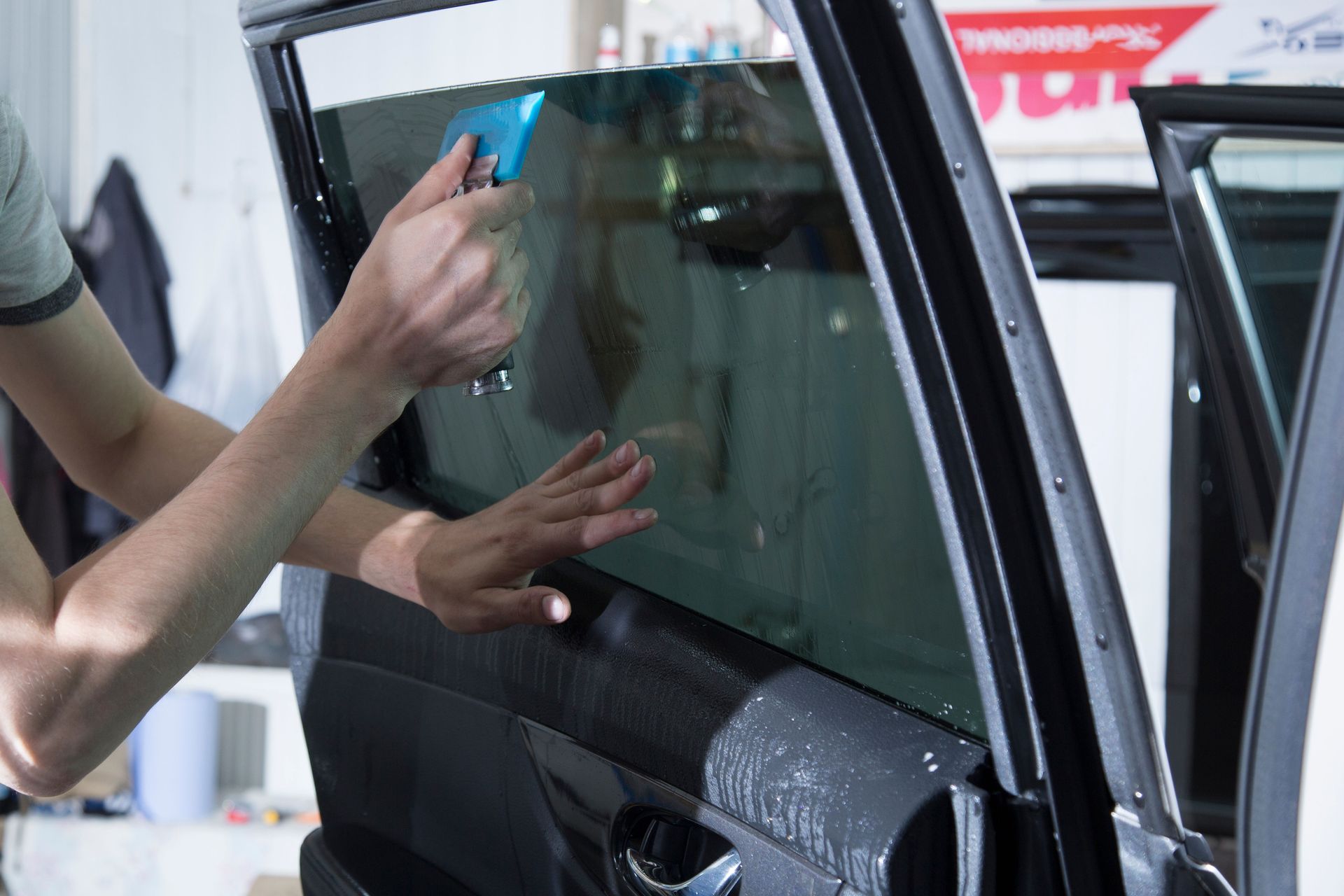
This is where window tinting becomes not just a style upgrade but a practical protective investment. Quality window film is engineered specifically to filter out ultraviolet radiation before it enters your vehicle. Most professional-grade window films block up to 99% of UVA and UVB rays, which is a dramatic improvement over untreated automotive glass.
The Science Behind UV-Blocking Window Film
Window tinting films contain UV inhibitors embedded within their layers. When sunlight hits the film, these compounds absorb the ultraviolet wavelengths and convert them into a negligible amount of heat rather than allowing them to pass through to your interior. Think of it like sunscreen for your car. Just as SPF 50 sunscreen absorbs UV rays before they reach your skin, window film absorbs them before they reach your dashboard, seats, and trim.
A key distinction here is that UV blocking is separate from visible light transmission. A window film can be nearly clear and still block 99% of UV rays. This is an important point for drivers in Huntersville who want UV protection without significantly darkening their windows.
Ceramic Window Tinting in Huntersville NC
Ceramic window tinting is widely considered the gold standard for UV protection. It uses non-metallic ceramic particles embedded in the film to block ultraviolet and infrared radiation without interfering with electronic signals like GPS, phone reception, or toll transponders. For drivers looking for the best car window tinting in Huntersville, ceramic film delivers the highest level of UV and heat rejection available on the market today.
Ceramic window tinting also holds its performance over time. Unlike some other film types, it does not fade, turn purple, or degrade in effectiveness after years of sun exposure. For a town like Huntersville that sees consistent sunshine throughout the year, that longevity is a significant practical advantage.
Carbon Window Tinting
Carbon window tinting is the next step down from ceramic but still offers excellent UV protection. It uses carbon particles to block UV rays and reject infrared heat. Carbon film performs better than dyed films in terms of UV blocking and durability, making it a solid mid-range option for drivers who want strong protection without the premium price of ceramic film.
Standard Dyed Film
Dyed window film is the most basic option and the most commonly found option at any budget window tinting shop in Huntersville NC. It does reduce visible light and glare, but its UV-blocking performance is noticeably lower than ceramic or carbon films. It also tends to fade and degrade faster in high-sun environments. For drivers serious about protecting their car's interior from UV damage in Huntersville, dyed film alone is not the most reliable long-term solution.
Which Car Windows Need UV Protection Most?
Many drivers assume that UV damage is primarily a windshield problem, but the reality is more nuanced than that.
Your windshield does block a significant amount of UV by default because most automotive windshields use laminated glass with a built-in UV filter. A quality windshield tint strip or full windshield film still adds meaningful additional protection, especially for the dashboard directly behind it.
Your side windows are actually the biggest vulnerability. Standard tempered glass used for side windows does not carry the same UV-blocking properties as laminated windshield glass. Most drivers have no idea how much UV radiation enters through these windows on a routine daily drive.
Your rear window matters especially for families with children or pets who regularly sit in the back seat. Any cargo stored in the rear of an SUV or wagon is also subject to ongoing UV degradation through an unprotected rear window.
How UV Protection from Window Tinting Preserves Your Car's Resale Value
This is a point that does not get nearly enough attention. A well-maintained interior is one of the primary factors that determines resale value when you eventually sell or trade in your vehicle. Buyers notice faded seats, cracked dashboards, and deteriorated trim. These are not just cosmetic issues. They signal neglect and raise concerns about overall vehicle care.
Auto window tinting in Lake Norman NC and the wider Huntersville area is increasingly being recognized not just as a comfort upgrade but as a genuine value-preservation strategy. A car with a clean, UV-protected interior commands a noticeably better resale price than one that has suffered years of unfiltered sun damage.
A Practical Example for Huntersville Commuters
Consider a driver who buys a new SUV and parks it daily in the open surface lot near Huntersville Family Fitness. Over five years without window tinting, the dashboard develops cracks, the leather seats fade unevenly on the sun-facing side, and the door panels start showing UV stress marks. Now compare that to an identical vehicle with ceramic window tinting installed from day one. The protected vehicle's interior looks significantly newer after the same five years, and at resale, that difference shows up directly in the asking price.
What to Look for in a Quality UV-Blocking Film
When evaluating window tinting options, look for these key indicators of genuine UV-blocking performance: a UV rejection rate of 99% or higher, a reputable brand with third-party testing data, a professional installation warranty, and clarity ratings that confirm the film will maintain visual transparency over time. Always ask your installer to show you the product specification sheet before committing to any film.
North Carolina Tint Laws and What They Mean for You
North Carolina has specific regulations governing how dark window tinting can be on passenger vehicles. For sedans, the front side windows must allow more than 35% of light in. For SUVs and vans, the rear side windows and rear window can be darker. UV protection has nothing to do with visible light transmission. A nearly clear film rated at 70% VLT can still block 99% of UV rays. Full UV protection is completely achievable while staying within North Carolina's legal requirements. Champion Window Tinting ensures every installation meets state compliance while still delivering maximum UV-blocking performance for your interior.
Conclusion
UV damage is one of those slow, invisible threats that car owners in Huntersville tend to ignore until it becomes impossible to overlook. Daily commuters, weekend lake-goers, and work vehicle drivers across the area all face the same ongoing UV exposure every time the sun hits unprotected glass.
Window tinting shop in Huntersville NC is one of the most practical and cost-effective ways to stop that damage before it starts. Ceramic and carbon films block up to 99% of UV radiation, preserve your seats, dashboard, and trim, and protect your vehicle's resale value in a way that very few other upgrades can match. The interior your car has today is worth protecting, and quality window tinting is the most direct way to do exactly that.
FAQ
1. Does window tinting really block UV rays or is that just a marketing claim?
High-quality professional window films are independently tested and certified for UV rejection. Premium ceramic and carbon films genuinely block up to 99% of UV radiation, which is a measurable, verified performance characteristic backed by third-party testing data, not a vague marketing term.
2. Will a nearly clear window tint still protect my car's interior from UV damage?
Yes. UV rejection is independent of visible light transmission. A film with 70% VLT can still block 99% of UV rays. You do not need a dark tint to achieve full UV protection for your car's interior in Huntersville NC.
3. How long does UV-protective window film last in North Carolina's climate?
Ceramic window films typically last 10 years or more when professionally installed. Carbon films offer similar longevity. Standard dyed films may begin to degrade in 3 to 5 years in high-sun environments like Huntersville NC.
4. Can window tinting reverse existing UV damage to my car's interior?
No. Window tinting prevents future UV damage but cannot reverse deterioration that has already occurred. A professional detailing service may help restore some appearance, but window tinting should be installed as soon as possible to stop any further damage from accumulating.
5. Is there a specific window tint percentage recommended for maximum UV protection in Huntersville NC?
The tint percentage, known as VLT, is not directly related to UV protection level. What matters is the quality and type of film. A 70% VLT ceramic film offers superior UV protection compared to a 20% VLT dyed film. Focus on the UV rejection rating listed on the product specifications rather than the darkness of the tint when making your decision.
Articles from the Champion Window Tinting Blog
Champion Window Tinting Services